...
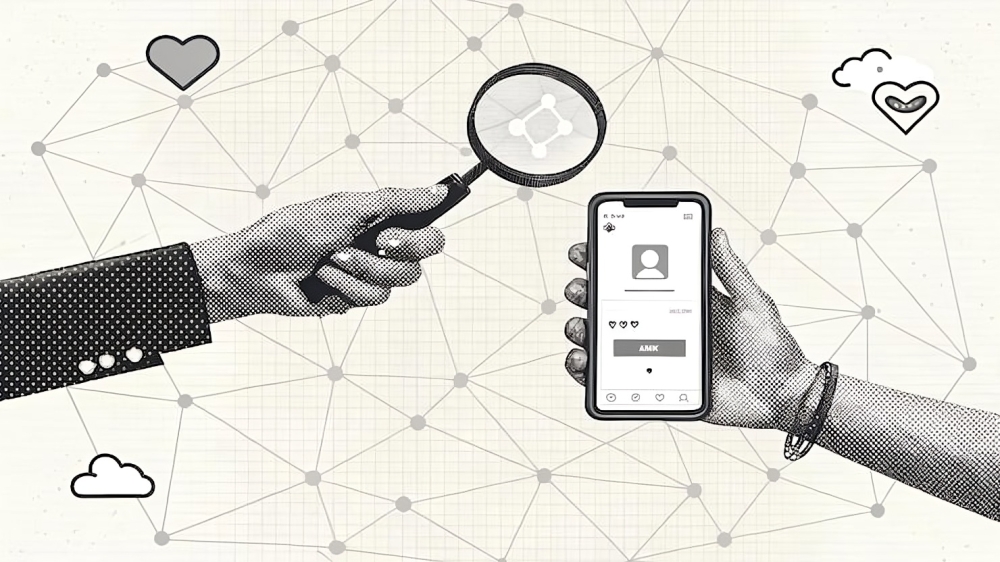
Social media is where most people leave the deepest, most current trail of who they are, where they go, and who they know. For an investigator, that trail is a gift and a trap. A gift, because a single public profile can surface an employer, a hometown, a partner, a car, a pet, a gym schedule, and a face — all self-published and time-stamped. A trap, because it is dangerously easy to cross a legal or ethical line: to log a private account by pretext, to scrape at a scale that breaks platform terms, to misread a reposted photo as original, or to build a confident conclusion on a coincidence of names. This course teaches disciplined, lawful social-media investigation. Everything here operates on public information — content that a subject has published to the open web, or made visible to anyone without authentication or deception. We do not teach account compromise, we do not teach pretexting (creating fake identities to gain trust or access), and we do not teach circumventing platform access controls. Those techniques are not just unethical; in many jurisdictions they are crimes under computer-misuse and fraud statutes, and evidence obtained that way is frequently thrown out. What you will learn is how to work the public surface with rigour: how each major platform type exposes information differently, how to connect accounts across platforms using durable identifiers rather than guesswork, how to extract location and time from the content of a post, how to build a defensible timeline, and — critically — how to capture and preserve what you find so it survives scrutiny. The through-line is verification over volume. Anyone can collect screenshots. A professional produces findings that hold up when the subject, opposing counsel, or a platform's own logs are consulted.
Who this course is for:
• Corporate investigators, fraud analysts, and insurance examiners running background and claims work • Journalists and researchers verifying identities, sources, and claims • Trust-and-safety, HR, and due-diligence professionals who vet people and organisations • Law-enforcement-adjacent analysts and legal-support staff who need methods that survive challenge • Cybersecurity and threat-intelligence practitioners profiling actors from their public footprint This is a Core course. You should be comfortable using the internet and a browser, but you need no prior OSINT training. It assumes you will act within the law and your organisation's policy; it is not a course in "getting into" anything.
What you'll be able to do:
✔ Build a structured subject profile from public social-media content across the major platform types ✔ Connect accounts that belong to the same person using durable identifiers and corroborating signals, while quantifying your confidence ✔ Extract and verify location from the content of posts (geolocation) without relying on the subject's location tags ✔ Reconstruct a defensible timeline of a subject's activity, reconciling posts across platforms and time zones ✔ Capture and preserve social-media evidence so it is authenticated, complete, and admissible ✔ Recognise and stay on the lawful side of the lines around private access, pretexting, and platform terms of service ✔ Identify and avoid the common errors — mistaken identity, stale data, staged content, and confirmation bias
Curriculum
-
-
Lesson 1 — Foundations, Law & the Investigative Frame Free preview
-
(Included in full purchase)
Lesson 2 — Platform Anatomy & Profiling
-
(Included in full purchase)
Lesson 3 — Connecting Accounts Across Platforms
-
(Included in full purchase)
Lesson 4 — Geolocation from Posts
-
(Included in full purchase)
Lesson 5 — Timelines & Pattern-of-Life
-
(Included in full purchase)
Lesson 6 — Capturing & Preserving Evidence
-
(Included in full purchase)
COMPLETION QUIZ
-