...
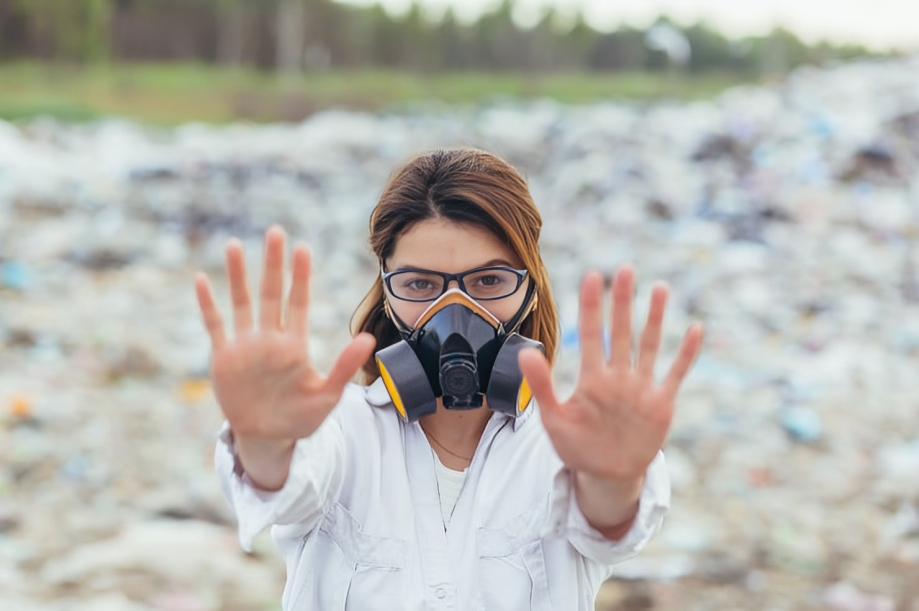
Environmental, pollution, and toxic tort claims are among the longest, most technical, and most expensive files an insurer will ever handle. A gasoline release from a service station's underground tank, a decades-old landfill leaching into a residential aquifer, a solvent plume migrating beneath an industrial park, and a mass of bodily-injury claims alleging that a facility's emissions caused disease in the surrounding neighborhood may all arrive as "pollution" claims, but they demand different investigations, implicate different coverage, invoke different scientific proof, and unfold over wildly different timelines. The adjuster who treats a first-party site cleanup like a third-party toxic tort — or who investigates either the way they would a routine property or liability file — misreads the exposure, mishandles the science, and loses control of a claim that may outlive their tenure on the desk. This course is built for practitioners who already handle complex liability or property files and want to move into the specialized world of environmental and toxic tort claims. It is written-first and worked-example driven. You will not find abstract theory here. You will find the questions to ask the insured about its operations and process history, the physical evidence to secure at a contaminated site, the sampling and assessment concepts you must understand to supervise consultants, the documents to demand before they are lost, and the coverage and causation battles that decide these files. A recurring theme runs through every lesson: environmental exposure is created over years but discovered in an instant, and the investigation must reconstruct a history that no single witness or document fully preserves. Contamination migrates underground for decades before a monitoring well or a sick resident brings it to light. By the time the claim arrives, the operators who handled the chemicals may be retired or dead, the disposal practices may be undocumented, the corporate ownership may have changed hands three times, and the science of who caused what — and when — must be rebuilt from soil cores, aerial photographs, permit files, and the memories of people describing events from thirty years ago. The investigator who understands this reconstructs the history deliberately. The one who does not inherits whatever fragments happen to survive. A note on scope and law: coverage for pollution and toxic tort turns heavily on policy language and on state law, and both vary enormously. The pollution exclusion exists in multiple forms with sharply different judicial interpretations; trigger-of-coverage and allocation doctrines differ from state to state; statutes of limitation and repose, and their discovery rules, are jurisdiction-specific; and federal and state environmental statutes overlay private liability with regulatory obligations. Federal cleanup liability under the Comprehensive Environmental Response, Compensation, and Liability Act — commonly called Superfund — and state analogues can attach broadly and retroactively, but their reach is fact-specific. Throughout this course, where a rule depends on jurisdiction, policy form, or regulatory applicability, we flag it. This is professional training, not legal advice. Nothing here is a definitive legal conclusion, and you should analyze coverage, causation, and liability questions with coverage counsel and qualified experts before acting.
Who this course is for:
• Property and liability adjusters ready to take on first-party pollution and third-party toxic tort files. • Environmental claims specialists building or defending site-cleanup and bodily-injury exposures. • Coverage and complex-claims professionals analyzing pollution exclusions, trigger, and allocation. • SIU and large-loss personnel managing long-tail, multi-party, and latent-injury claims. • Claims supervisors who need a common standard for how their teams investigate environmental losses. This is an Advanced course. We assume you already understand basic liability and coverage-versus-liability distinctions, how to read a policy, and how to conduct an insured interview. We build from there into the science, the documents, and the coverage doctrines that make environmental claims distinct.
What you'll be able to do:
✔ Triage a new environmental loss and immediately distinguish first-party pollution cleanup from third-party bodily-injury or property-damage toxic tort — and adjust your investigation accordingly. ✔ Recognize how the pollution exclusion, in its absolute and qualified forms, and specialty environmental policies interact with the loss in front of you. ✔ Understand the long-tail and latency problem and why trigger-of-coverage and allocation questions dominate these files. ✔ Supervise a site assessment and sampling program conceptually — Phase I and Phase II, soil, groundwater, and air — and work productively with environmental consultants and industrial hygienists. ✔ Interview the insured about operations, process history, materials handled, historical disposal practices, and prior knowledge of contamination. ✔ Develop regulators, toxicologists, prior owners and operators, and community claimants as witnesses and information sources. ✔ Identify, demand, and preserve the full environmental document set — operations and disposal records, permits, prior assessments, regulatory correspondence, monitoring data, and medical records. ✔ Map coverage across policy years and insurers, analyze causation, and drive an environmental or toxic tort file to a defensible resolution.
Curriculum
-
-
Lesson 1 — The Environmental Claim Landscape Free preview
-
(Included in full purchase)
Lesson 2 — The Site & Environmental Evidence
-
(Included in full purchase)
Lesson 3 — Statements & the Insured
-
(Included in full purchase)
Lesson 4 — Witnesses, Regulators & Experts
-
(Included in full purchase)
Lesson 5 — Documents to Secure
-
(Included in full purchase)
Lesson 6 — Coverage, Causation & Resolution
-
(Included in full purchase)
COMPLETION QUIZ
-